

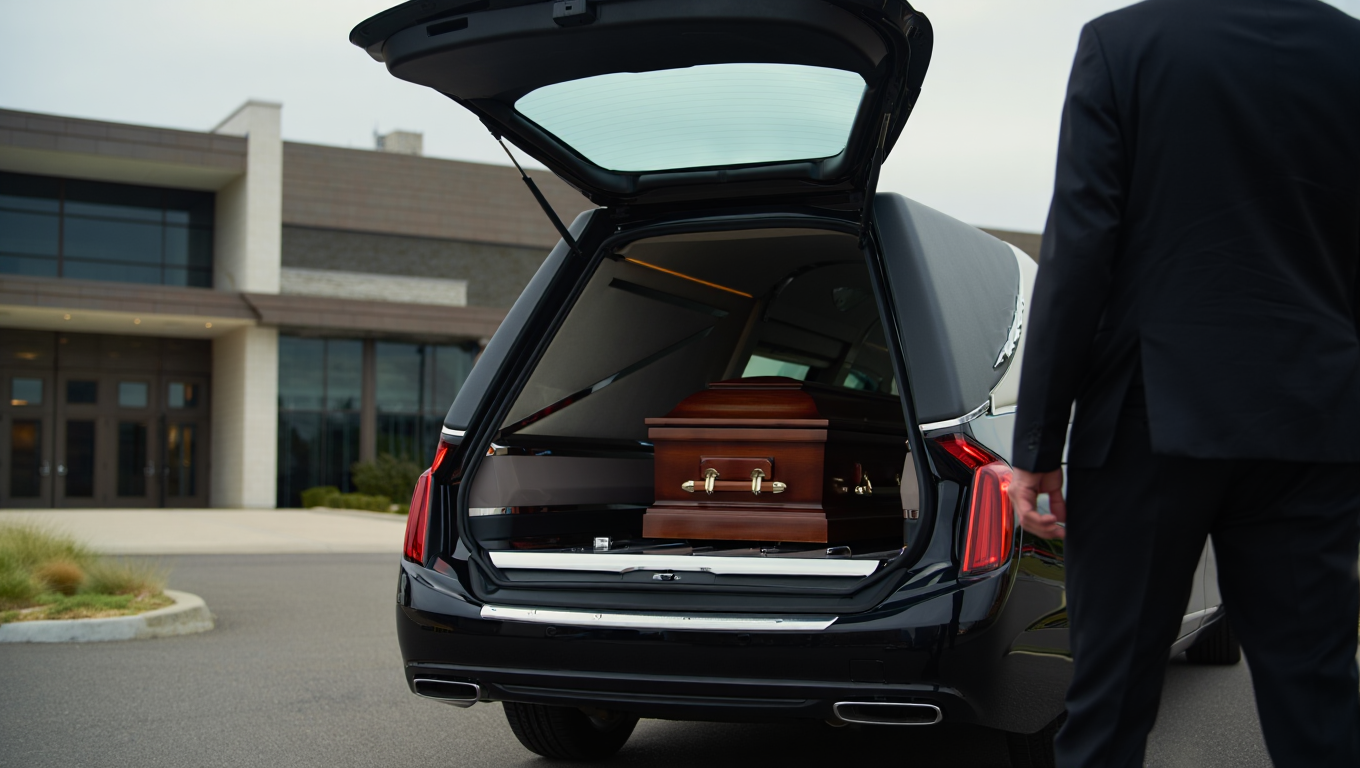
How to Transport a Loved One’s Body Across State Lines
September 4, 2026 7:37 pm Leave your thoughtsLosing a loved one is difficult enough without having to navigate complicated transportation arrangements. When a death occurs away from home or a burial is planned in another state, families may need assistance with transporting a body across state lines. The process can feel overwhelming at first, but experienced funeral professionals can coordinate much of the paperwork, preparation, transportation, and communication involved. Understanding the basic steps can help your family make informed decisions while allowing you to focus on honoring your loved one.
Why Families May Need to Transport a Loved One Across State Lines
There are many circumstances in which a deceased person may need to be transported from one state to another. A person may pass away while traveling, attending college, working temporarily away from home, spending part of the year in another state, or receiving medical treatment far from their permanent residence.
In other situations, transportation may be necessary because the family has chosen a cemetery, funeral home, crematory, or burial location in another state.
Common reasons for interstate transportation include:
- A loved one dies while on vacation or traveling for business.
- A person passes away in a hospital or care facility outside their home state.
- The family has an established cemetery plot in another state.
- A veteran will be buried in a qualifying veterans cemetery away from the place of death.
- Religious or family traditions call for burial in a specific community.
- Family members want funeral or memorial services held closer to relatives.
- A person had previously expressed wishes to be buried in their hometown or another meaningful location.
Whatever the circumstances, a licensed funeral professional can help determine the appropriate transportation process.
Contact a Funeral Home as Soon as Possible
One of the first steps after a death is contacting a funeral home. If your loved one needs to be moved to another state, you should tell the funeral director where the death occurred and where you ultimately want the remains transported.
In many cases, two funeral homes may be involved. The first funeral home, sometimes called the shipping funeral home, takes custody of the deceased near the place of death and prepares the remains for transportation. The receiving funeral home accepts the remains at the destination and handles the final arrangements.
Your funeral director can often communicate directly with the receiving funeral home, transportation company, airline, cemetery, and other parties. This coordination can significantly reduce the number of logistical responsibilities placed on your family.
Determine What Documents Are Required
Transporting human remains generally involves documentation. Exact requirements may depend on the states involved, the method of transportation, the circumstances surrounding the death, and the final form of disposition.
Your funeral director can determine which documents apply to your situation.
Possible documentation may include:
- A certified death certificate or documentation of the death
- A burial or transit permit
- Authorization for transportation
- Embalming or preparation documentation when applicable
- Cremation authorization if cremation will occur before transportation
- Information required by the receiving cemetery or funeral home
- Airline or cargo documentation when remains are transported by air
Because state requirements can differ, families should avoid assuming that rules in one state automatically apply in another. Working with funeral professionals familiar with interstate transportation can help prevent unnecessary delays.
Does a Body Have to Be Embalmed Before Crossing State Lines?
Not necessarily.
There is no blanket rule requiring every deceased person in the United States to be embalmed. According to the Federal Trade Commission, no state requires routine embalming for every death. Certain states may require embalming or refrigeration when burial or cremation does not occur within a specified period, while others have different preservation requirements.
Whether embalming is appropriate can depend on several factors, including:
- State requirements
- Transportation method
- Length of time before burial or cremation
- Airline or carrier requirements
- Whether a public viewing is planned
- Religious or cultural preferences
- Condition of the remains
Refrigeration may be an alternative in certain circumstances. Your funeral director can explain what is required and help you choose the option that is consistent with your family’s plans.
Families also have consumer protections when arranging funeral services. Under the Federal Trade Commission’s Funeral Rule, consumers generally have the right to purchase only the funeral goods and services they want rather than being required to purchase an entire package. Funeral providers must also provide itemized pricing information under applicable circumstances.
Choose a Transportation Method
The most practical transportation option will usually depend on distance, timing, cost, and the family’s plans.
Ground Transportation
For relatively short interstate distances, a funeral home may arrange transportation using an appropriate funeral vehicle or professional transportation service.
Ground transportation may be practical when the destination is within driving distance. The funeral home will generally ensure that the deceased is properly prepared and transported according to applicable requirements.
The price may be calculated using mileage, distance zones, transportation fees, or another method established by the provider.
Air Transportation
For longer distances, transportation by air is often more practical.
Human remains transported by air are typically handled through airline cargo systems rather than as ordinary passenger baggage. Air cargo traveling on passenger aircraft is subject to federal security screening requirements administered by the Transportation Security Administration.
Funeral homes that regularly coordinate interstate transportation understand how to work with airlines, cargo facilities, and receiving funeral homes.
The funeral home may help arrange:
- Preparation of the deceased
- Required transportation containers
- Airline scheduling
- Documentation
- Delivery to the appropriate cargo facility
- Communication with the receiving funeral home
- Pickup at the destination airport
Because airline policies and schedules can change, families should work directly with their funeral provider rather than attempting to arrange shipment independently.
Understand the Role of a Shipping Container or Casket
Transportation requirements are not necessarily the same as burial requirements.
Depending on the carrier, transportation method, and preparation of the deceased, an approved shipping container may be required. This does not always mean the family must purchase an expensive traditional casket solely for transportation.
Your funeral director can explain available options and identify what the transportation provider requires.
If a burial casket has already been selected, the funeral home can determine whether additional protective or shipping materials are needed.
Consider Cremation Before Interstate Transportation
Some families choose cremation in the state where the death occurred and then transport the cremated remains to the final destination.
This can simplify certain transportation arrangements because transporting cremated remains is typically different from transporting an intact body.
However, cremation should only be selected if it reflects the wishes of the deceased and the family’s plans. It should not be viewed solely as a logistical decision.
If cremation is chosen, the funeral home can help with the necessary authorization, cremation process, urn selection if desired, and arrangements for transporting the cremated remains.
Coordinate With the Receiving Funeral Home and Cemetery
Good communication between the shipping funeral home and receiving funeral home is one of the most important parts of the process.
Before transportation occurs, the receiving funeral provider should know when and how the deceased will arrive. They can then prepare for the next stage of arrangements.
The receiving funeral home may be responsible for:
- Receiving the deceased from the carrier
- Transportation from an airport or other arrival location
- Funeral or memorial services
- Visitation
- Cemetery coordination
- Burial arrangements
- Veteran burial coordination
- Final disposition
If a cemetery is involved, the cemetery may also have its own scheduling or documentation requirements.
Ask for an Itemized Explanation of Costs
Interstate transportation can involve several separate expenses. Costs vary depending on distance, transportation method, preparation requirements, airline charges, funeral home fees, and other services.
Potential expenses may include:
- Funeral home transportation charges
- Transfer from the place of death
- Preparation or refrigeration
- Embalming when selected or required
- Transportation containers
- Airline cargo charges
- Ground mileage
- Receiving funeral home charges
- Airport pickup
- Permits or administrative expenses
- Cemetery or burial costs
The Federal Trade Commission’s Funeral Rule gives consumers important rights regarding funeral pricing, including access to itemized price information and the ability to select individual goods and services rather than automatically purchasing a package.
Ask your funeral director to explain which charges relate specifically to transportation and which charges involve funeral, cremation, or burial services.
Avoid Trying to Manage Every Detail Yourself
Families naturally want to ensure everything is handled correctly, but interstate transportation involves multiple organizations and potentially different state requirements.
Trying to coordinate every detail independently can add unnecessary stress during an already emotional time.
A knowledgeable funeral planner can become the central point of contact between:
- Your family
- Hospitals or care facilities
- Medical examiners or coroners, when applicable
- Funeral homes
- Airlines
- Transportation providers
- Cemeteries
- Crematories
- Veterans cemeteries
- Government agencies responsible for required documentation
Professional coordination can make the process much easier to understand and manage.
Plan Ahead When Possible
Although many interstate transportation arrangements are made unexpectedly, some families know in advance that a burial will eventually occur in another state.
Preplanning can make those future arrangements significantly easier.
During advance planning, you can discuss:
- Preferred burial location
- Preferred funeral home
- Cremation or burial preferences
- Veteran burial eligibility
- Green burial preferences
- Religious or cultural traditions
- Transportation expectations
- Budget considerations
Documenting these wishes gives surviving family members clearer guidance and can help reduce difficult decisions later.
Frequently Asked Questions
Can a funeral home transport a body to another state?
Yes. Funeral homes regularly coordinate interstate transportation. Depending on the distance, transportation may occur by professional ground transportation or through airline cargo services.
Do I need two funeral homes?
Often, yes. A funeral home near the place of death may prepare and transport the deceased, while a funeral home in the destination state receives the deceased and coordinates final services. In some situations, one provider may be able to coordinate most aspects of the process.
Is embalming required when crossing state lines?
Not automatically. Requirements vary depending on state laws, transportation circumstances, timing, and carrier policies. The FTC notes that no state requires routine embalming for every death.
How long does interstate transportation take?
Timing varies according to distance, transportation method, documentation, airline availability, preparation requirements, and receiving funeral home scheduling. Your funeral director can provide a more specific estimate after reviewing the circumstances.
Can a body be transported by car?
Professional ground transportation may be available, particularly for shorter distances. Families should speak with a licensed funeral professional about applicable requirements before attempting any form of transportation themselves.
Can cremated remains be transported across state lines?
Yes. Cremated remains can generally be transported across state lines, although transportation methods and carrier requirements may differ. A funeral home can provide guidance based on whether the remains will be driven, shipped, or transported by air.
Who handles the paperwork?
Funeral homes commonly assist with the documentation required for transportation, including permits and records associated with the death and final disposition.
How much does it cost to transport a deceased person to another state?
There is no single fixed price. Costs depend on distance, preparation, transportation method, carrier charges, funeral home services, containers, and services provided by the receiving funeral home. Ask for itemized pricing before making final arrangements.
Can a veteran be transported to another state for burial?
Yes. Families may arrange transportation for burial in an eligible veterans cemetery or another chosen cemetery. A funeral planner familiar with veteran burial services can help coordinate the necessary arrangements.
What should I do first if my loved one dies in another state?
Contact a trusted funeral home and explain where the death occurred and where you want your loved one transported. The funeral director can help coordinate with the facility holding your loved one and any receiving funeral provider.
Let ICS Cremation & Funeral Home Help Your Family
When your family is coping with a loss, complicated funeral arrangements should not become another source of stress. The knowledgeable funeral planners at ICS Cremation & Funeral Home are here to provide compassionate guidance, straightforward information, and dependable assistance throughout the planning process.
Since 2000, we have been a premier funeral planner and crematory serving communities throughout North Central Florida. Our goal is to make funeral arrangements as stress-free and straightforward as possible while delivering high-quality work at affordable rates.
Whether your family needs help coordinating transportation, planning a traditional funeral, arranging cremation, considering a green burial, or preparing for a veteran cemetery burial, our experienced team is ready to guide you through your options with care and respect.
Contact us today for caring, quality, and affordable funeral services for your family.
Categorised in: End of Life
This post was written by ICS Team